
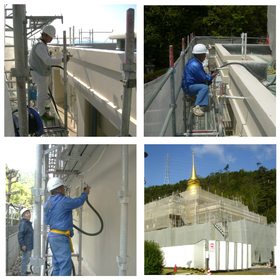
This is an example of photocatalytic treatment (anti-soiling) on the exterior walls of a temple building.
The decomposition of organic dirt using photocatalysts and self-cleaning creates a clean environment by breaking down substances that cause dirt, odors, bacteria, and mold both inside and outside buildings.
【Product Introduction】 ■ Raw Material Titanium Dioxide By coating a titanium dioxide aqueous solution, which serves as the raw material for photocatalysts, on the ceilings and walls of buildings, it exhibits effects such as dirt resistance, deodorization, antibacterial properties, antiviral properties, and mold prevention. ■ Indoor Photocatalyst When light hits the surface of the indoor photocatalyst, reactive oxygen species are generated on the surface, decomposing organic substances that cause dirt and odors into harmless water and carbon dioxide. ■ Outdoor Photocatalyst When rain hits the surface of the outdoor photocatalyst, a hydrophilic effect causes water to spread thinly beneath the dirt, contributing to self-cleaning as the dirt flows away with the water, thereby maintaining the aesthetic of the building and reducing cleaning costs. ■ Duration of Photocatalytic Effect Since the titanium dioxide used as the raw material for the photocatalyst is inorganic, it does not degrade due to ultraviolet rays or other factors, and the effect continues for a long time as long as the coating substrate's paint surface or wallpaper does not peel off. *For more details, please refer to the PDF document or contact us.
- Company:チタンネクストジャパン
- Price:Other

